
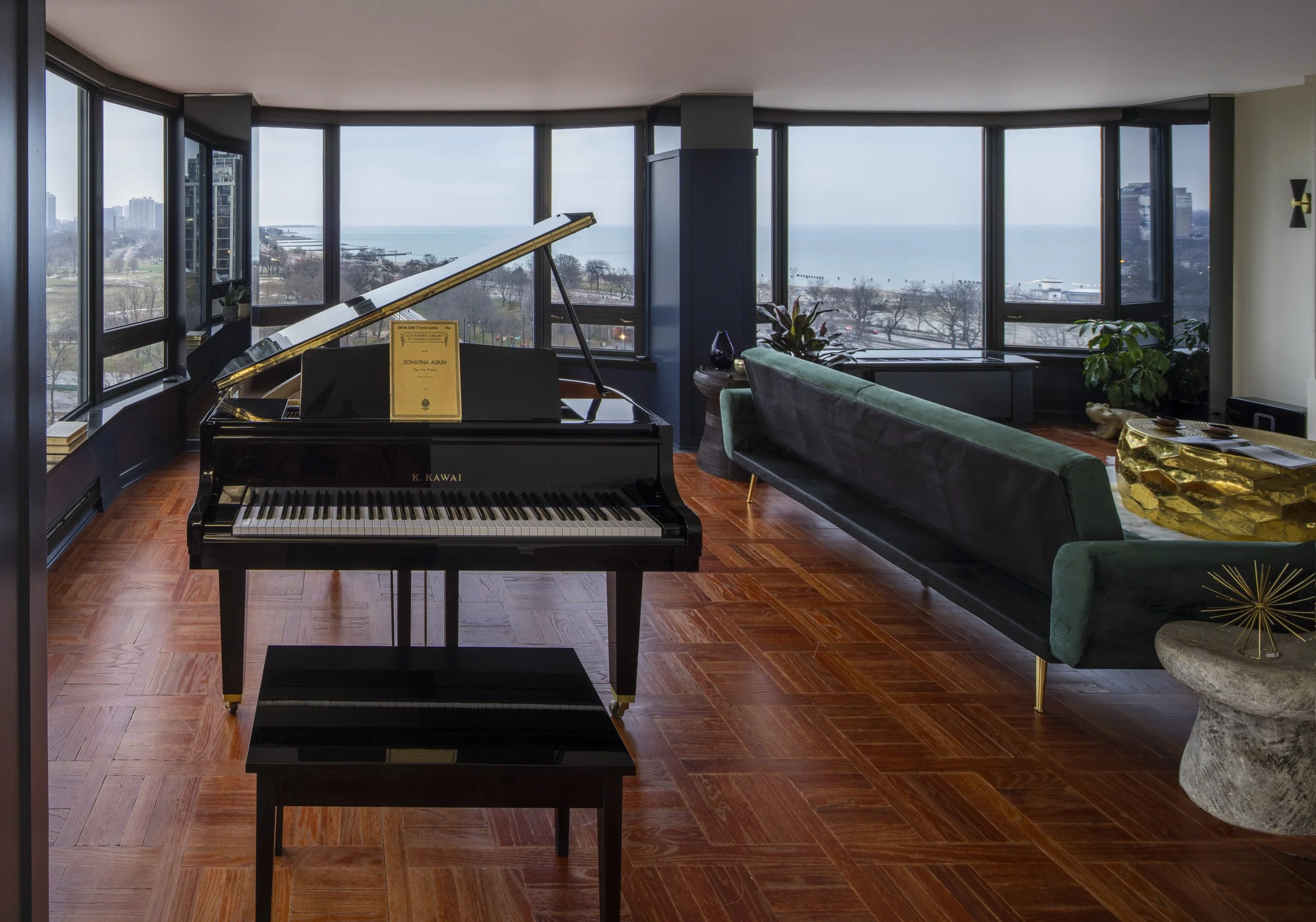
The Astor Tower Residence
— LANDMARK PROPERTY | HISTORIC PRESERVATION | LUXURY INTERIORS | HIGH RISE
PRACTICE AREA
Custom Residential
LOCATION
Gold Coast | Chicago, IL
SCOPE
Landmark Preservation | Full-Unit Renovation | Layout Reconfiguration | Historic Restoration | Custom Millwork | High Rise Logistics
RECOGNITION
Contractor of the Year by National Association of the Remodeling Industry | First Place for Historical Restoration by American Society of Interior Designers
— THE PROJECT
A childhood home,
reimagined
for who they’d become.
This residence occupies a floor of The Astor Tower, the 1963 Bertrand Goldberg landmark that opened as a luxury hotel and was converted to condominiums in 1979 in the Astor Street District. The owners are its first generation of residents — a family who grew up in the building and set out to make a childhood home unmistakably their own as adults. The work had to begin with what could not change: a structure of cast-concrete slabs and columns that carries the tower and forbids cutting into a ceiling or freely relocating a wall or utility line. Every design decision had to be made within these boundaries.
The design tasked Integro to reclaim square footage the unit never had — demolishing a vestibule in the building's public corridor and drawing the space into the unit as a formal foyer. The original art-deco bar was restored and extended; new millwork radiator enclosures replaced the existing window seats and concealed the wiring for the motorized window treatments; and the building's original parquet was refinished where it survived and replicated where it did not, the new work indistinguishable from the old. Where the structure forced the foyer to double as the unit's main passage, design intent set it apart with double-sliding pocket doors carrying twenty-four stained-glass panes, custom fabricated by a Chicago artisan under Integro’s direction.
The hardest test came late. In the final weeks of construction, the night before the cabinetry and millwork were due to arrive, the fabricator's shop burned to the ground. Integro rebuilt the schedule, supported the fabricator through reconstruction, and absorbed the project-management burden of an unplanned restart — carrying the work, and the clients, through the delay to a finished home.
What that home shows now is none of the difficulty behind it: a landmark interior that looks as though it was always meant to be theirs.
— CONSTRUCTION DOCUMENTATION
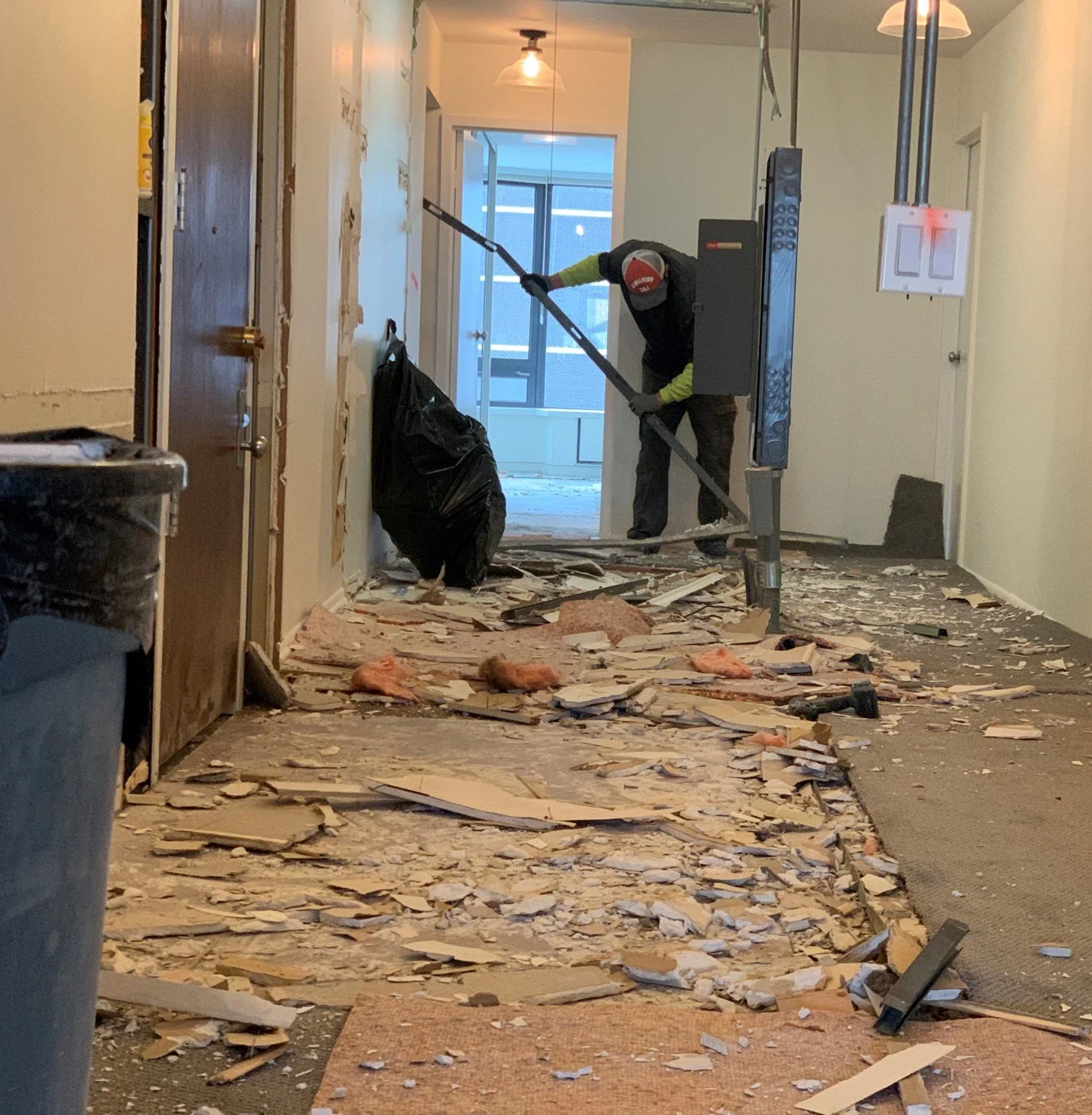
The finished home tells one story. The process tells another. Demolition alone ran three times longer than a single family: elevator time was rationed and paid for by the day, debris left the building only in covered bins, the corridors along the route were padded and protected, and HEPA filtration ran throughout to keep dust and odor from neighboring homes. These images record the choreography a high-rise demands, the custom fabrication the design required, and the recovery that followed the loss of the millwork shop weeks before completion.
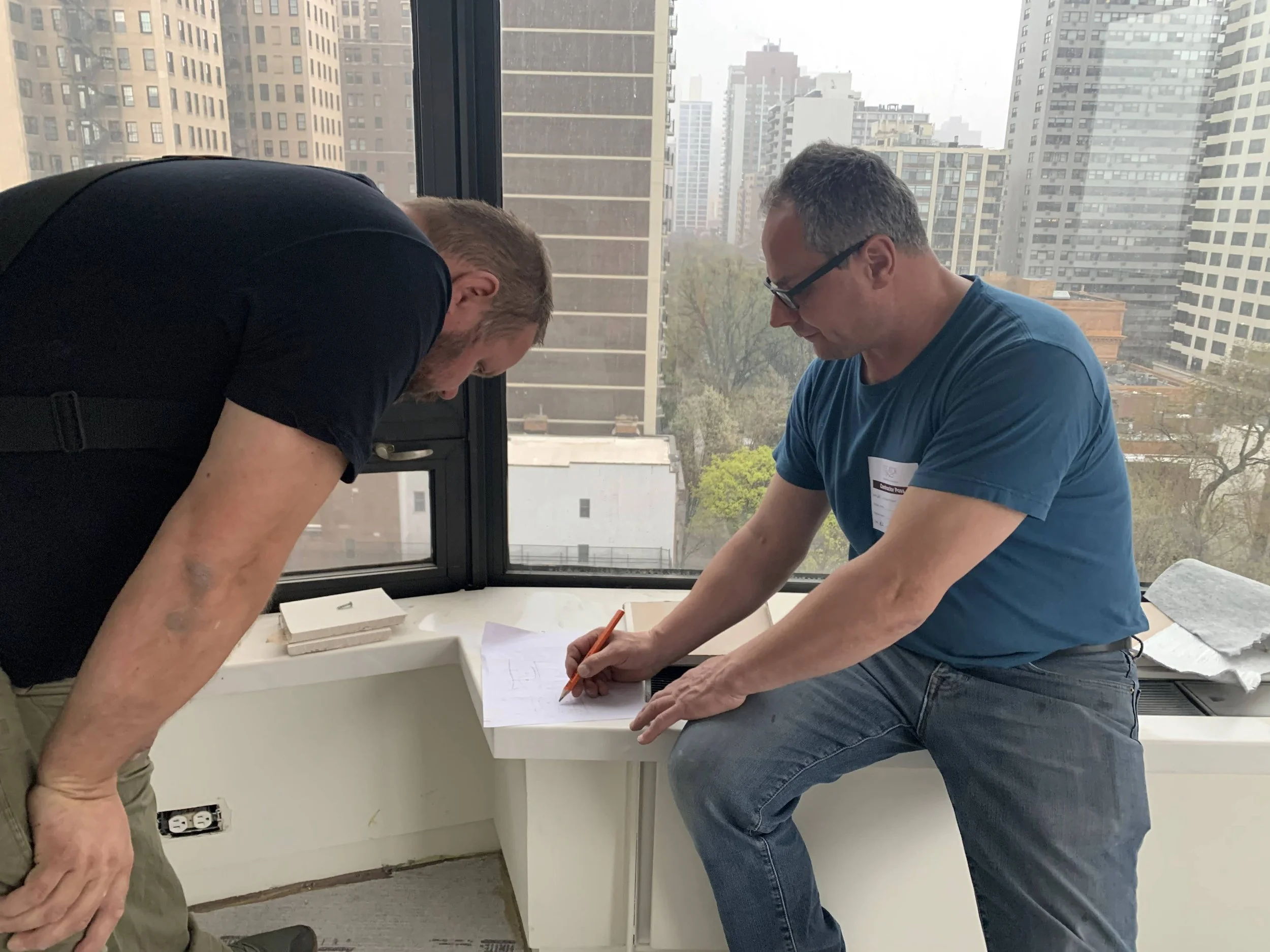
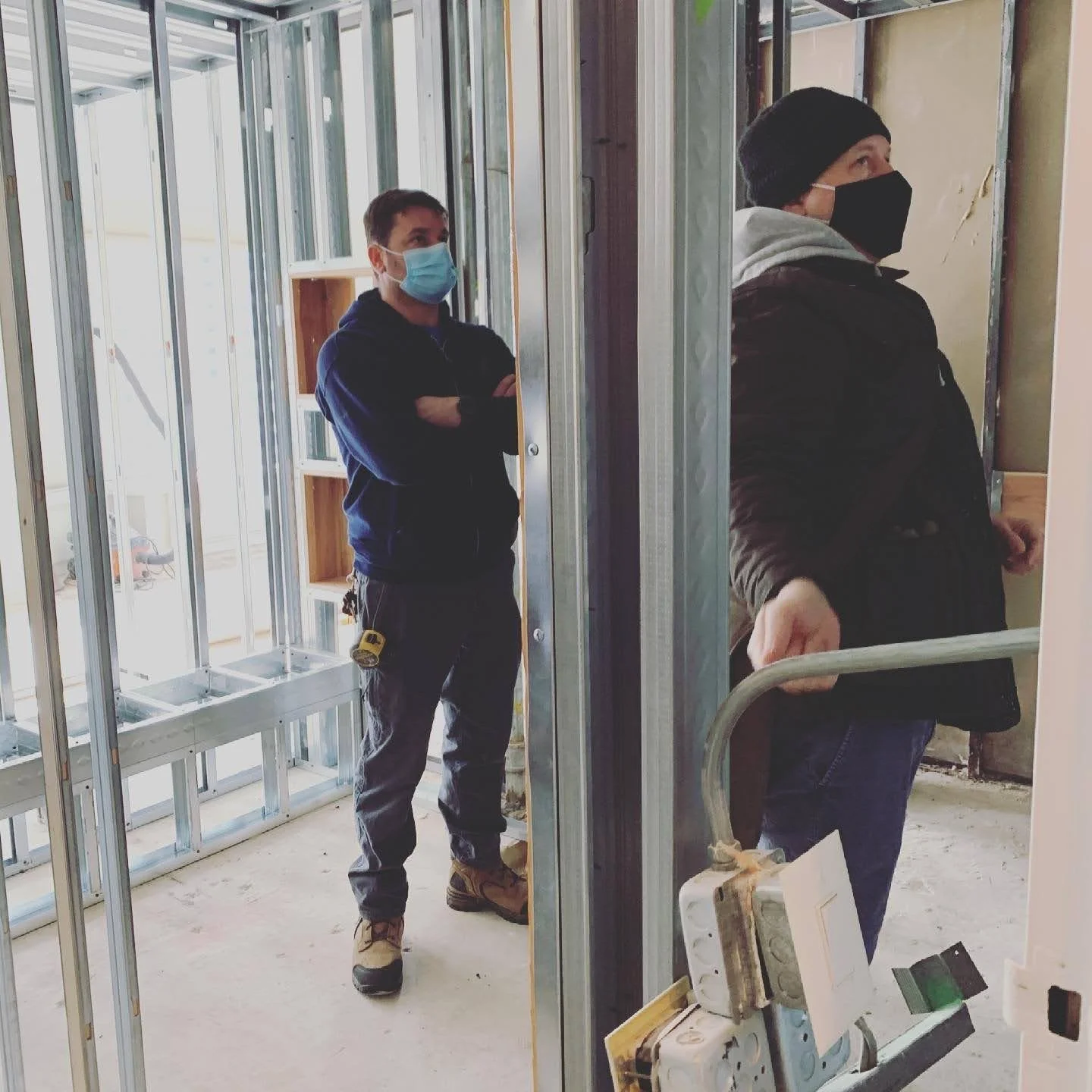
Integro and team working through the challenge of achieving design intent within the fixed boundaries of the structure.
Demolition in high rise buildings requires hand labor for both sound and dust mitigation.
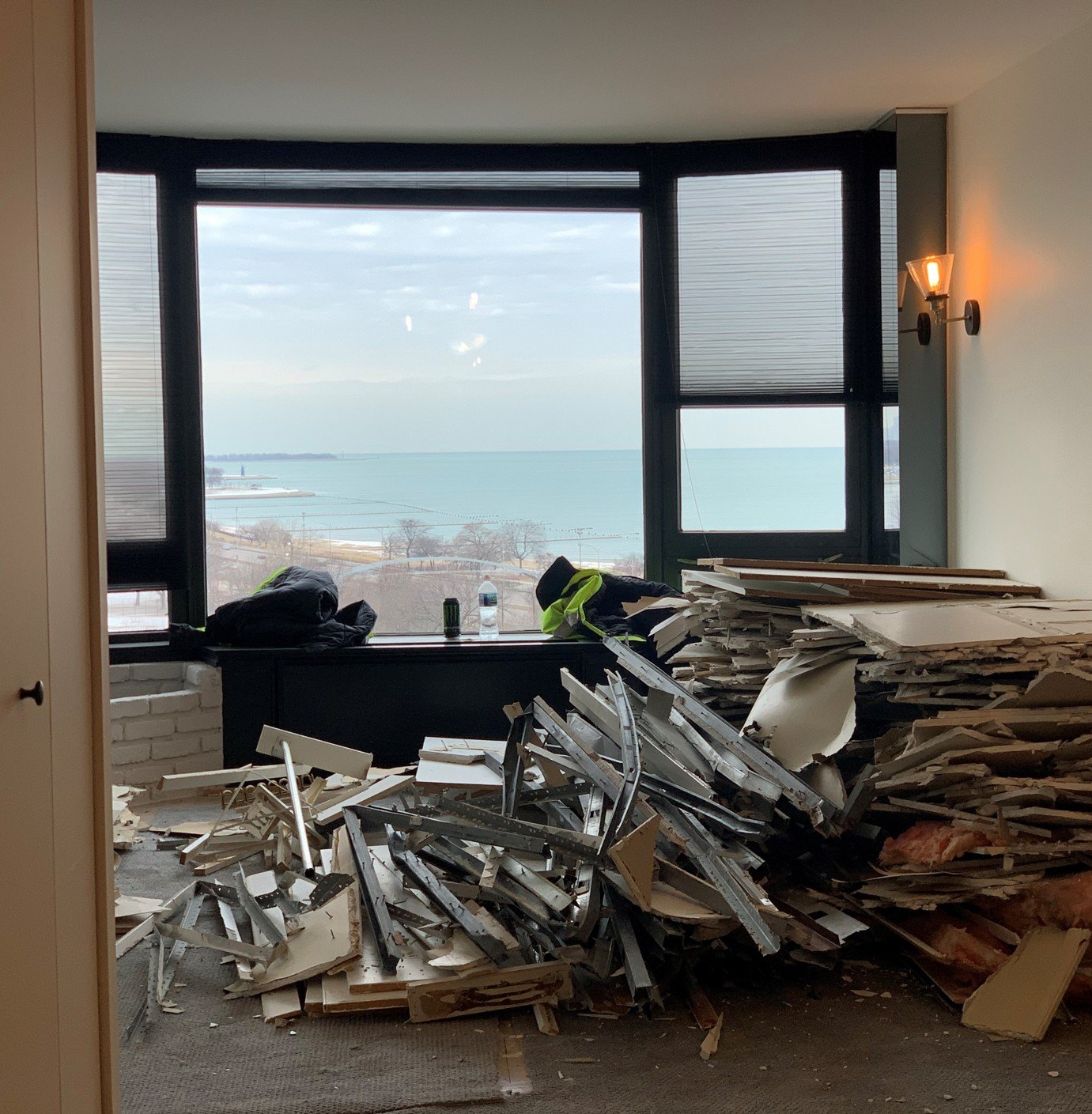
Demolition operates in a three-phase, three-day cycle: 1) Manual demo; 2) Place debris in covered carts with rubber wheels; 3) Haul carts into reserved elevator to waiting dump truck for offsite disposal. This also applies to debris hauls throughout construction.
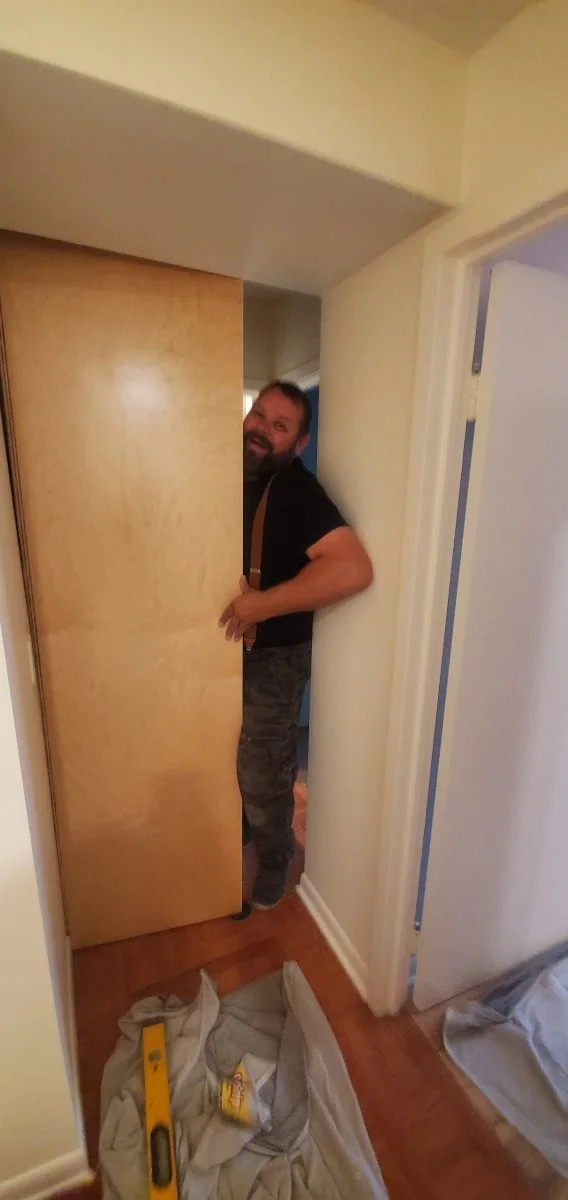
High rise logistics can be a tight squeeze!
Working closely with the design team for critical dimensions and intent.
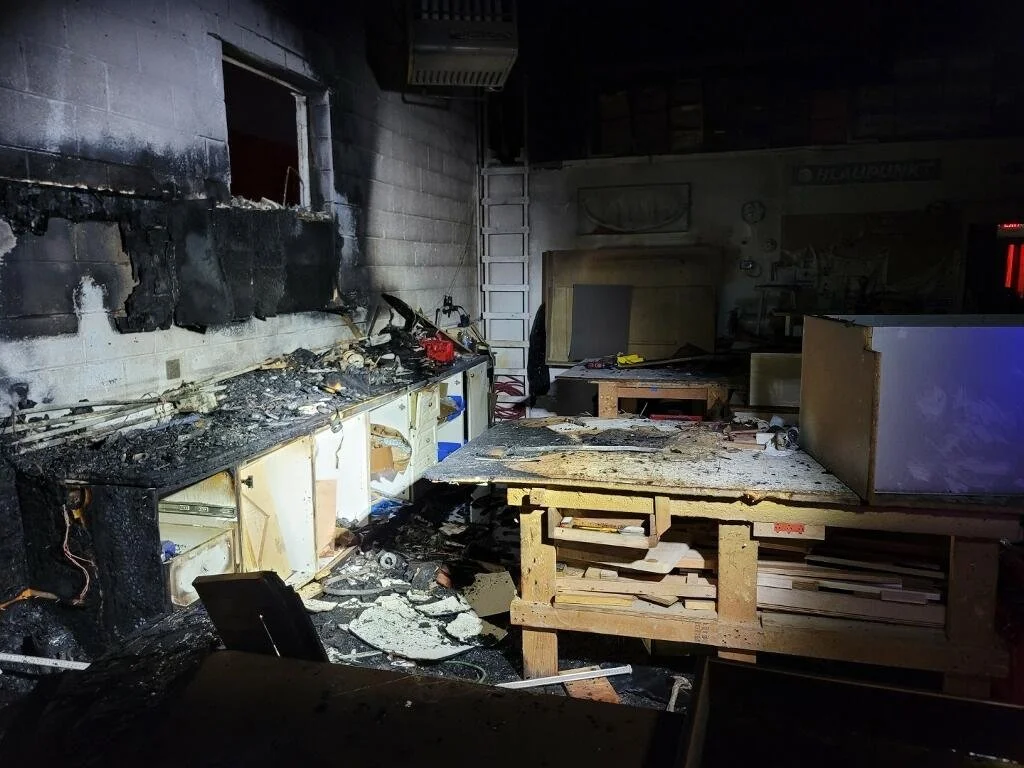
Approaching the final weeks of construction, we we were ready to welcome all of our custom fabricated millwork and cabinetry.
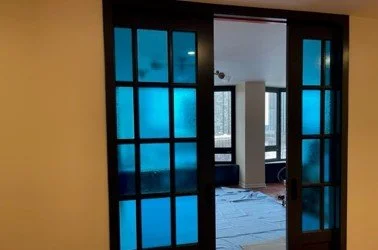
Twenty-four individual stained glass panes were designed and custom fabricated by a local Chicago glass artisan under our direction.
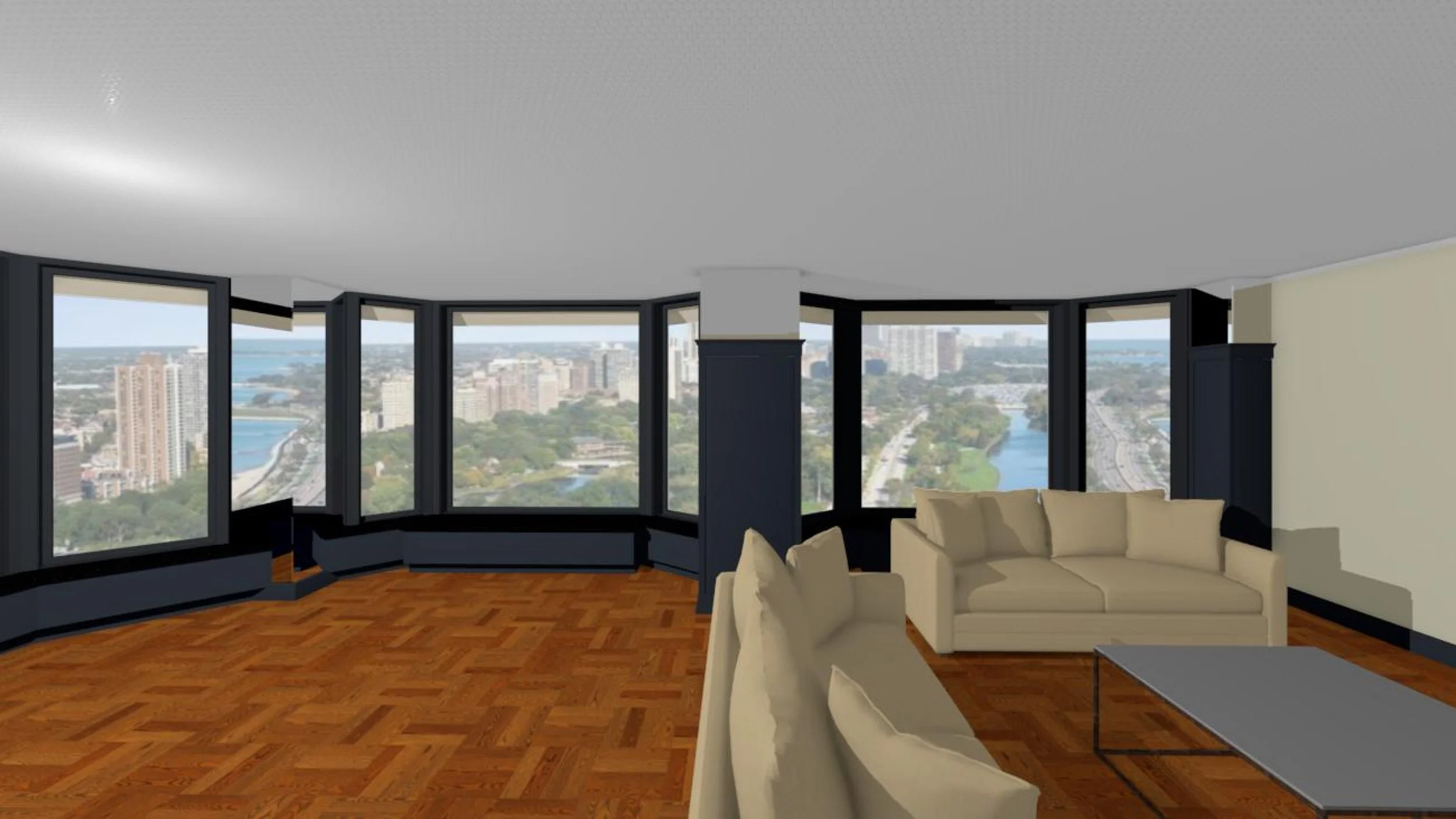
Renderings of the custom millwork designed to define and elevate the original living room.
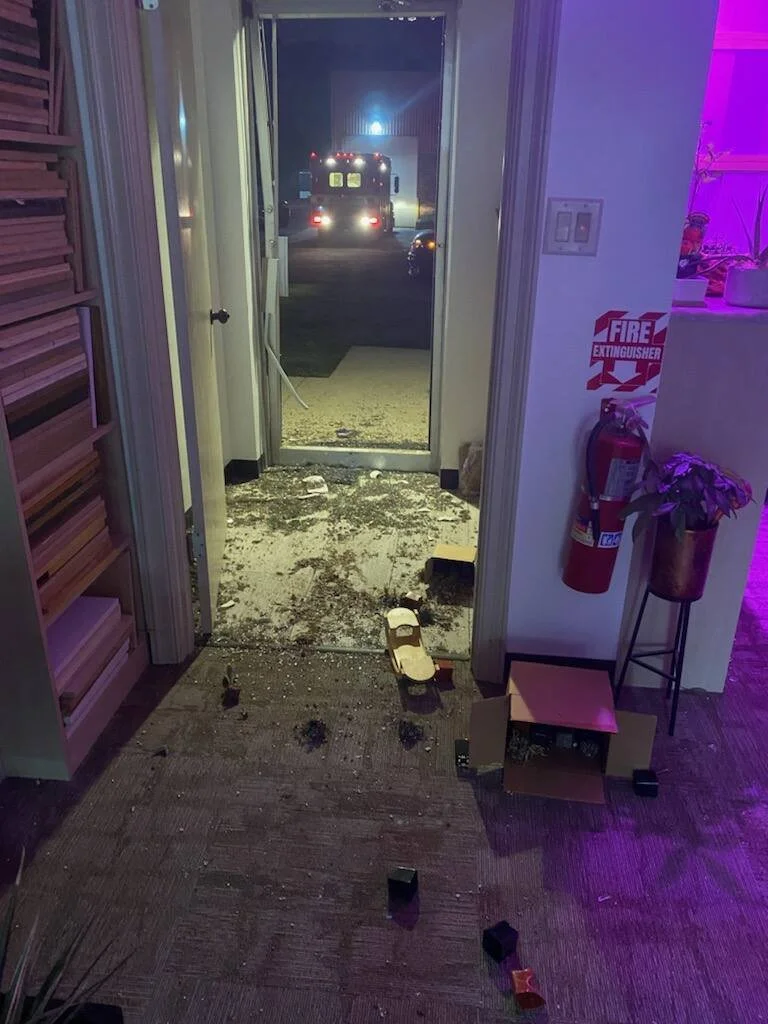
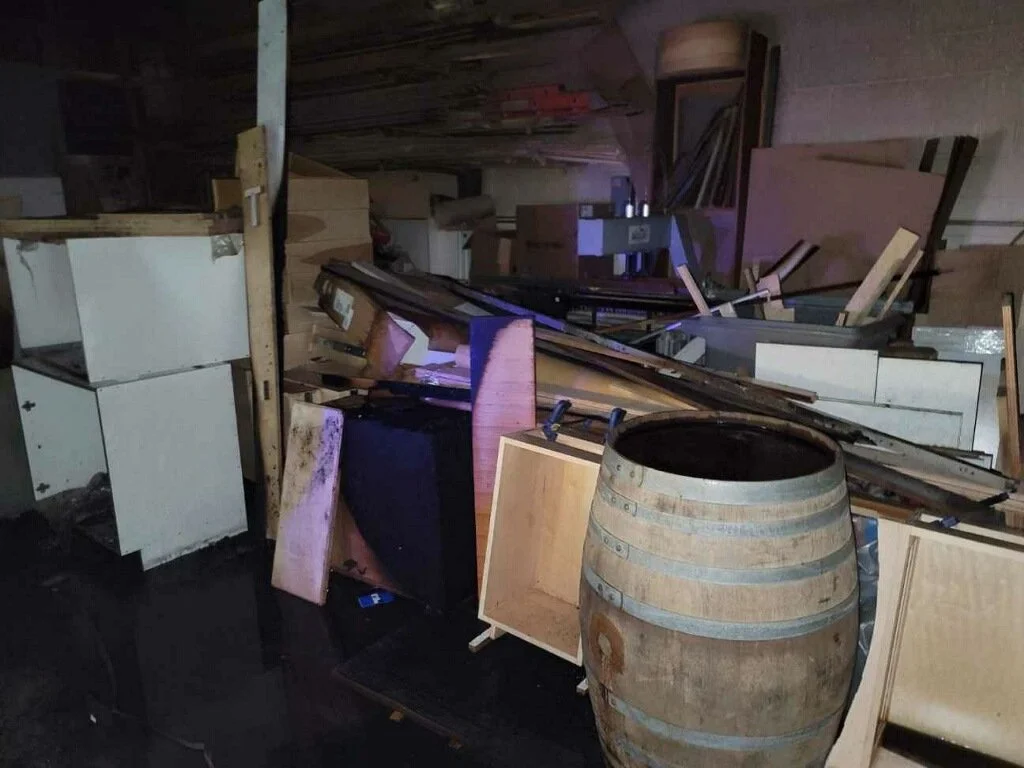
Our incredible clients worked with Integro to execute the critical task at hand: supporting our millworker through their personal nightmare.
The night before our delivery, our millworker’s shop burned down.
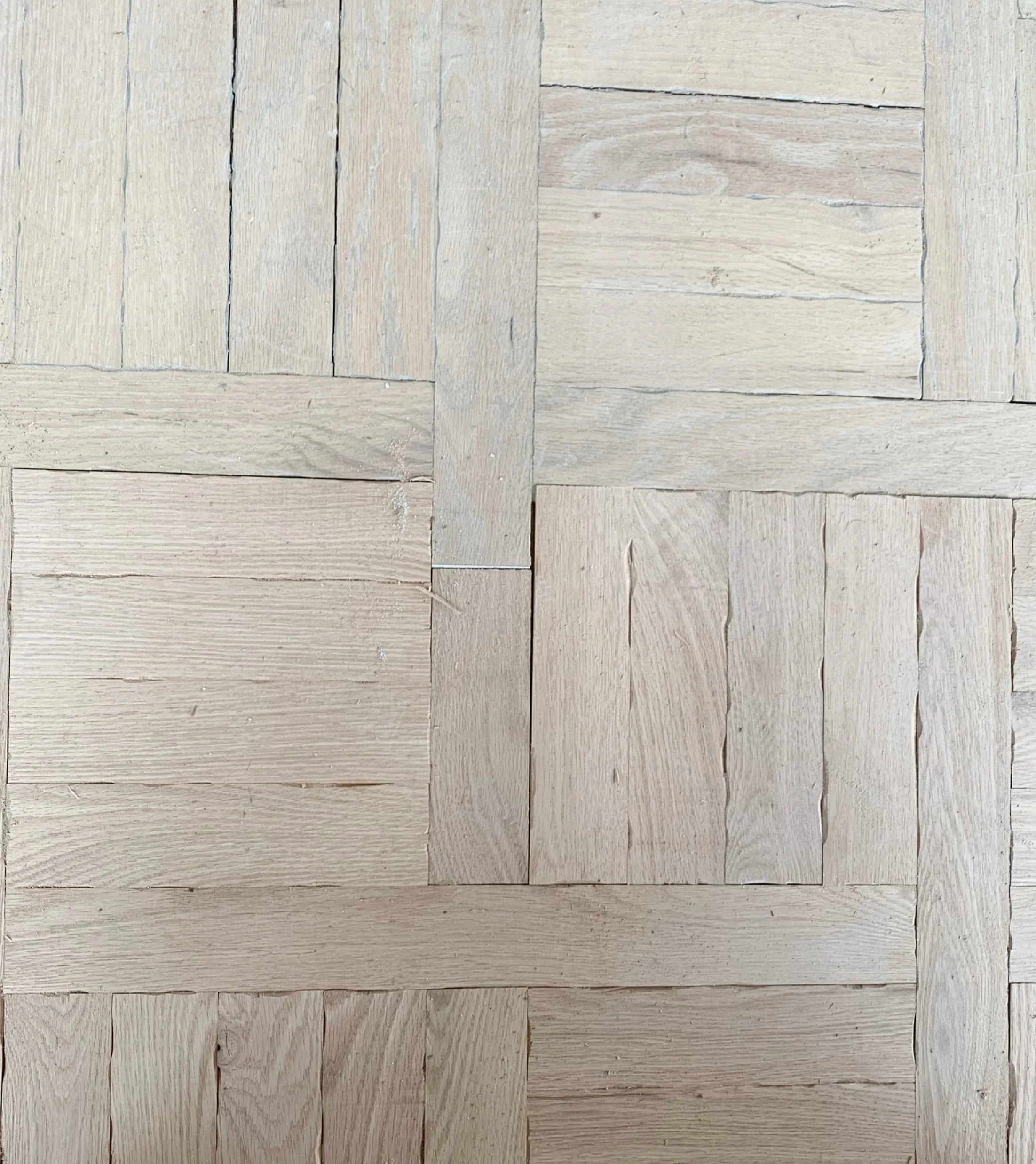
The original parquet floors were either restored or replicated. This image shows both conditions, can you tell which is which?
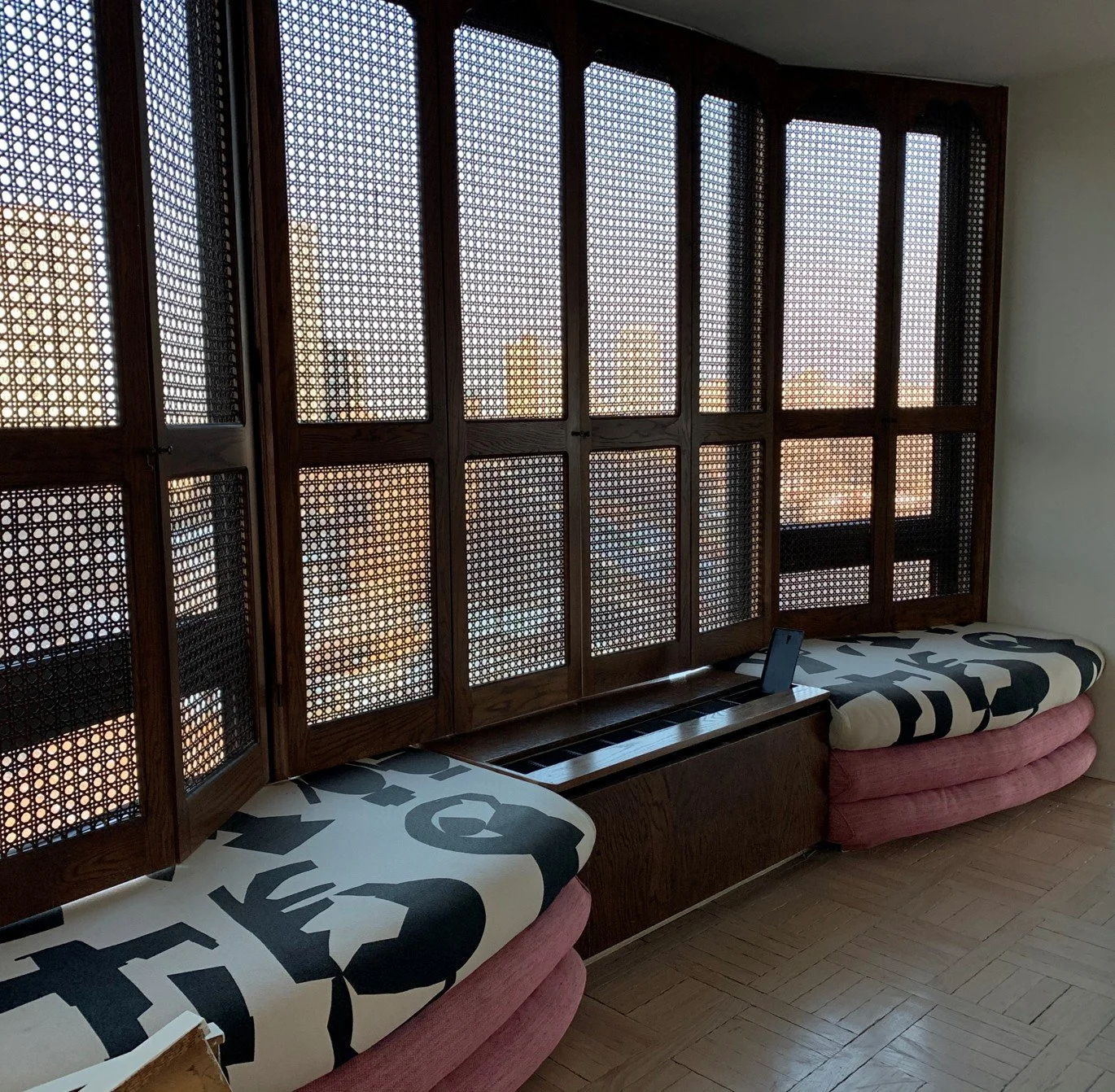
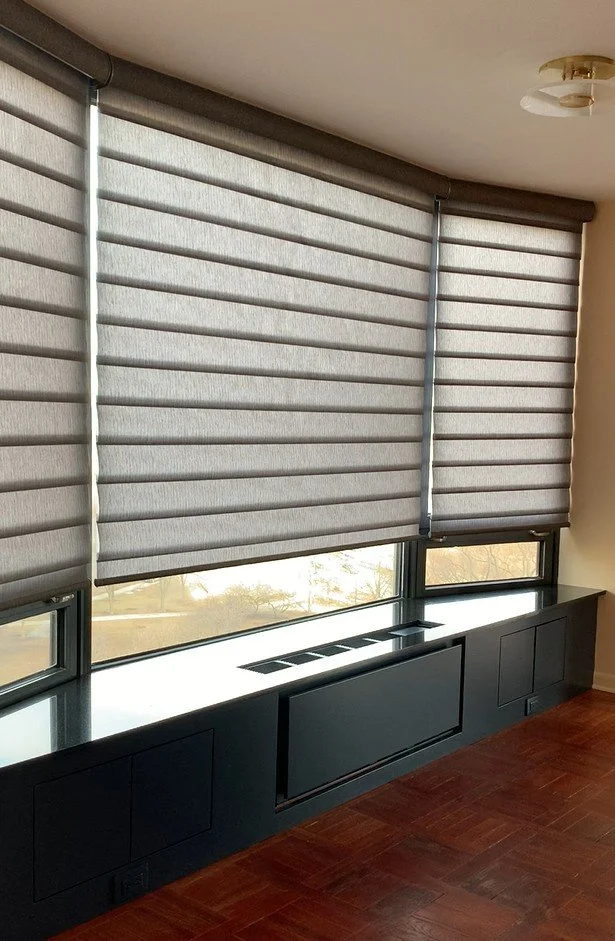
New motorized window treatments and custom fabricated radiator covers to replace the original window seating.
The original window seating and 1970s-era window coverings opposite the wet bar.
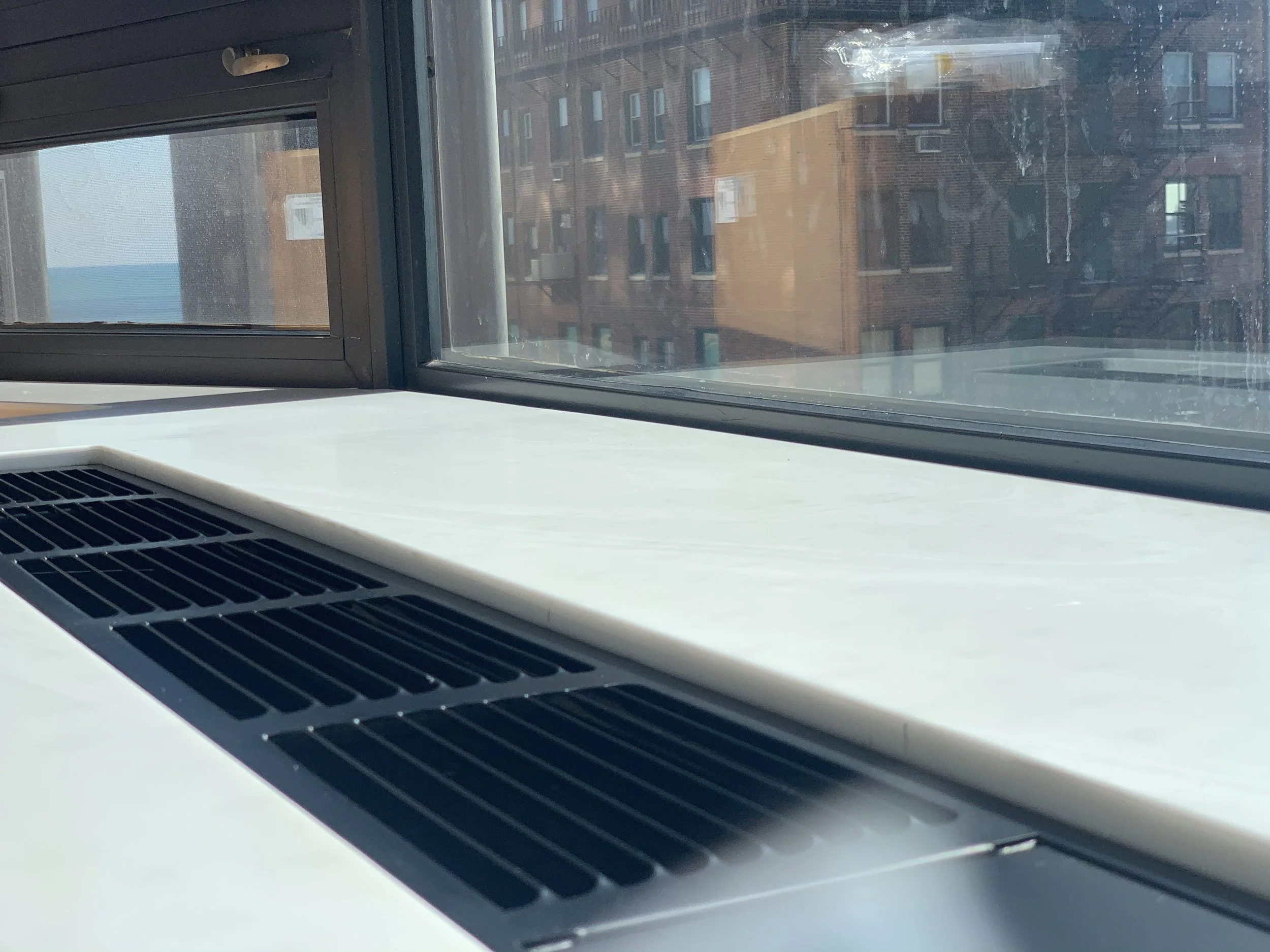
Tops were fabricated with Corian to withstand the temperature changes of the radiators and the condensation from the windows.
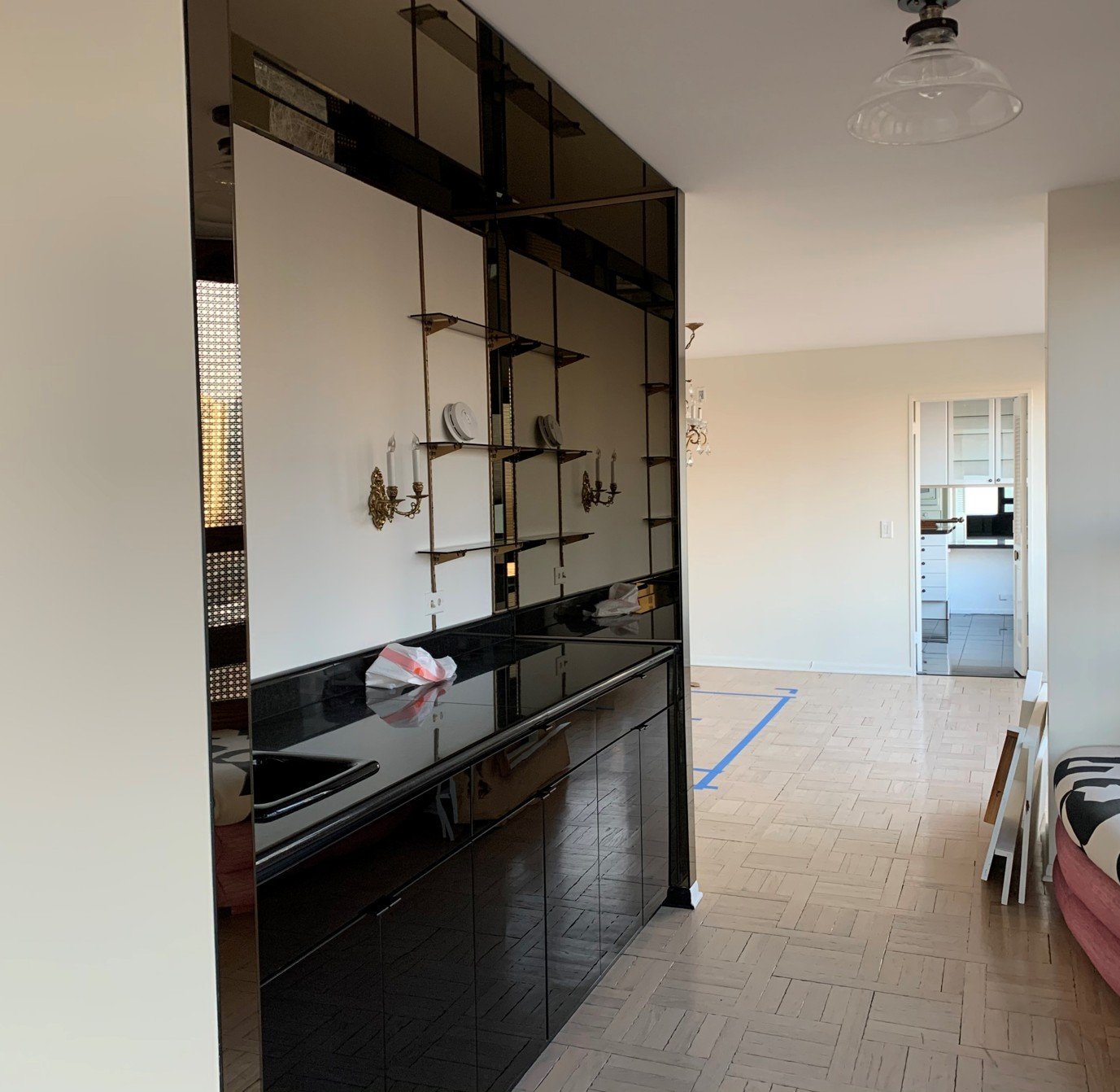
The art deco wet bar, circa 1963, was restored by hand through Integro craftsmen.
— PROJECT IMAGERY



PHOTOGRAPHY BY Tom Rossiter
PRACTICE AREA

Custom Residential
Working inside a landmark meant accepting the building's terms first — what the concrete would allow, what the board would permit, what the elevator could bear. Reading those limits before the work began, and engineering the design to live within them, is the preconstruction discipline behind our residential practice. Standing with the clients when the unforeseen struck is the rest of it.